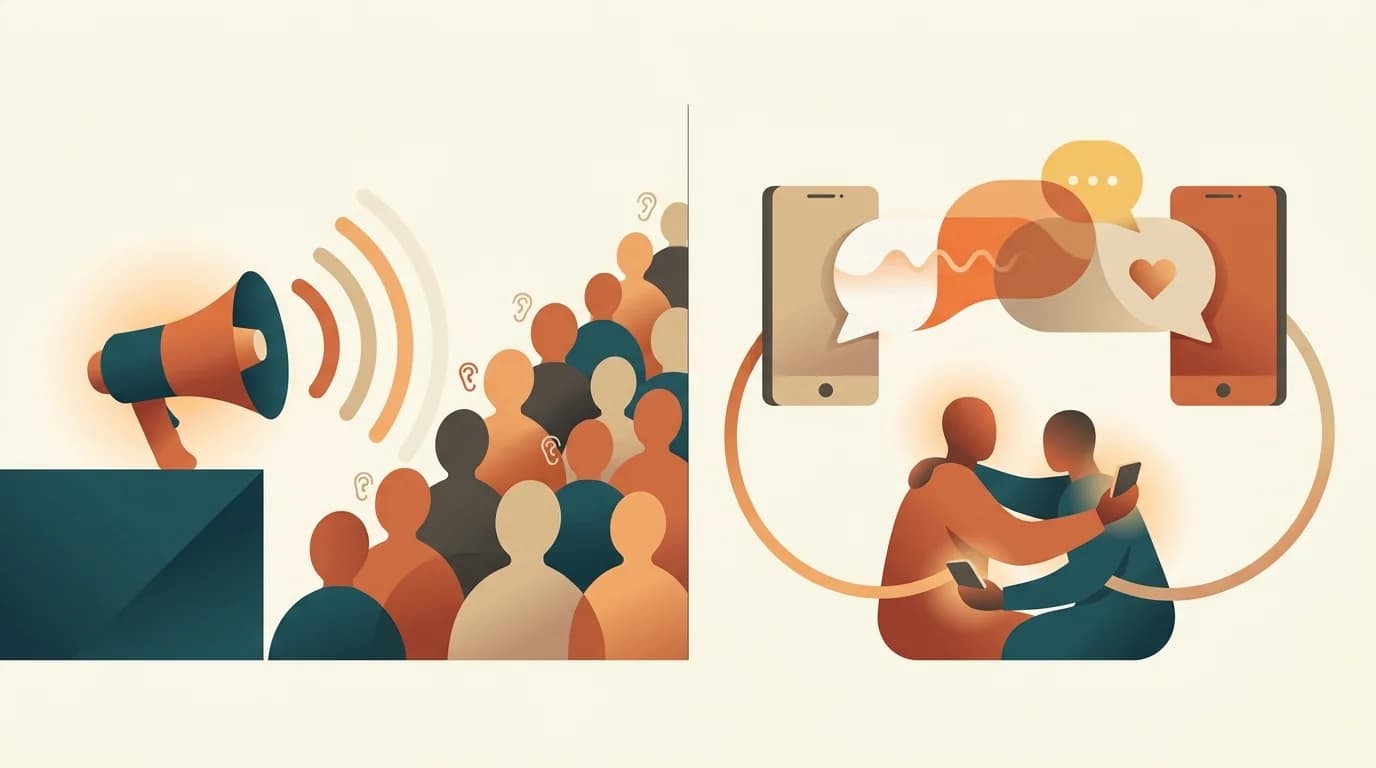
There are two very different ways to use WhatsApp as a business channel: sending messages to many people at once (broadcasts) and having individual conversations. Both are powerful. Both can backfire. Most Moroccan businesses either ignore broadcasts entirely or overdo them to the point that customers block the number.
Here's how to use each mode effectively.
What Broadcasts Are Good For
WhatsApp broadcasts — or "campaigns" in API terminology — are outbound messages sent to a list of opted-in customers simultaneously. They're most effective for:
Promotional announcements
- New collection arrivals: "Jwat l collection jdida l rbiy3iya — chuf l catalog 👇"
- Limited offers: "Soldes -30% this weekend only"
- Restocks of popular items: "L marka li bgha f stock — daba mwjoda"
Seasonal and event-based messages
- Ramadan greetings with special offers
- Eid collections preview
- Back-to-school promotions (for educational or family products)
Operational updates affecting multiple customers
- Shipping delays due to weather or courier strikes
- New payment options available
- Service hours changes during holidays
Re-engagement
- Customers who haven't ordered in 60+ days
- Abandoned cart-style reminders (if you have a website with checkout)
The key qualifier for all of these: the customer must have opted in to receive marketing messages from you. This isn't just best practice — it's required by WhatsApp's policies. Sending unsolicited broadcasts gets numbers banned.
What Broadcasts Are Bad For
Broadcasts fail when they're used as a substitute for service:
- Answering individual queries via broadcast — if one customer asks about stock, don't blast everyone about stock
- High frequency with low value — sending broadcast messages daily trains customers to ignore or block you
- Generic messages that feel impersonal — "Dear valued customer" energy kills engagement
- Non-actionable content — "Just wanted to say hi!" is not a WhatsApp marketing strategy
The fastest way to get your number blocked is to make customers feel like they're on an email spam list. WhatsApp is a more intimate channel than email — customers tolerate less noise.
When 1-to-1 is Always Right
Individual conversations are the right mode for:
- Any service interaction — order questions, complaints, returns, payment issues
- Custom requests — quotes, personalized orders, bulk pricing
- Post-sale follow-up — delivery confirmation, usage questions
- Relationship building with high-value customers
The golden rule: if a message is in response to something a specific customer said or did, it should be a 1-to-1 message, not a broadcast.
The Frequency Question
How often is too often for broadcasts? For a Moroccan SMB, a rough guide:
- Product-based businesses (clothing, food, cosmetics): 2–4 broadcasts per month is the ceiling. Peak seasons (Ramadan, Eid, back-to-school) allow slightly more.
- Service businesses (agencies, freelancers, consultants): 1–2 per month maximum. Service businesses have fewer natural reasons to reach out.
- Event-driven businesses (venues, caterers, travel): Broadcast only when genuinely relevant. A pre-Eid message from a caterer is welcome. A mid-January "book your summer wedding" message is noise.
Watch your reply rate after broadcasts. If fewer than 5% of recipients engage (reply or click), either your content isn't relevant or your frequency is too high.
A Practical Broadcast Calendar
For a typical Moroccan retail business, a month of broadcasts might look like:
| Week | Message | Type |
|---|---|---|
| Week 1 | New arrivals preview with catalog link | Promotional |
| Week 2 | — (no broadcast) | — |
| Week 3 | Mid-month offer for existing customers | Loyalty |
| Week 4 | Weekend flash sale | Urgency |
That's four broadcasts in a month — enough to stay present, not enough to annoy.
Structuring a Good Broadcast Message
A WhatsApp broadcast that gets responses typically follows this structure:
- Personal opener — greeting in Darija or French, short
- One clear point — what you're announcing, in 1–2 sentences
- Visual — image or short video when possible (product shots outperform text-only)
- One call to action — a button, a link, or a simple instruction like "reply with your size"
Avoid long blocks of text. If you need more than 4 lines to make your point, the message is too long.
Example of a well-structured broadcast:
Salam [Name] 🌙

Jwat s-soldes l Eid: -25% 3la kol shiy f l catalog.

[Product image]

📦 Delivery f 24–48h
💰 Paiement à la livraison disponible

👉 Chuf l catalog: [link]
Short. One offer. One action. Works in Darija. Has delivery and COD callouts — because that's what Moroccan customers want to see before they commit.
The Opt-Out Problem
Make it easy to opt out. Include a note at the bottom of occasional broadcasts: "Reply STOP to no longer receive our offers." This feels counterintuitive, but customers who want to leave will leave anyway — giving them an easy out prevents them from blocking your number, which is far worse for your sender reputation.
AidGens helps businesses build broadcast calendars, manage opt-in lists, and set up 1-to-1 service flows — all on WhatsApp. Reach out if you want to discuss what a setup looks like for your business size and category.